Art Direction
I develop visual systems, spatial experiences, and image-led narratives across photography, archives, exhibitions, lighting, and public-facing creative projects.
Visual direction and exhibition concept development for an archival photography project centered on women at NASA Langley.
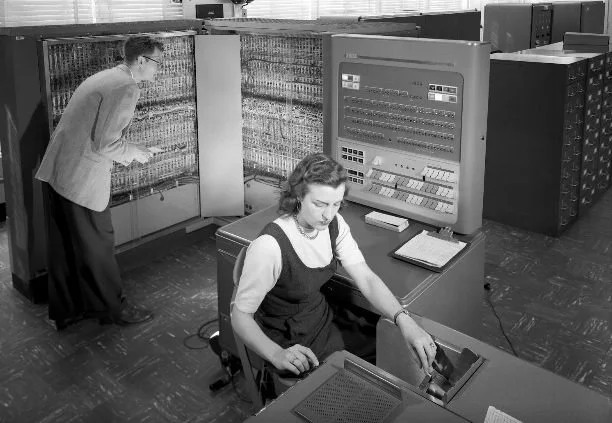
Women of NASA
Role:
Tools:
Type:
GardenFest is a large-scale seasonal lighting experience at Lewis Ginter Botanical Garden that transforms the landscape into an immersive nighttime environment. My work translates curatorial themes into site-specific lighting concepts, color palettes, visual moments, and practical installation plans across garden spaces. The project brings together environmental art direction, lighting design, spatial planning, production coordination, and visitor experience design, with attention to atmosphere, wayfinding, safety, infrastructure, and the living landscape.
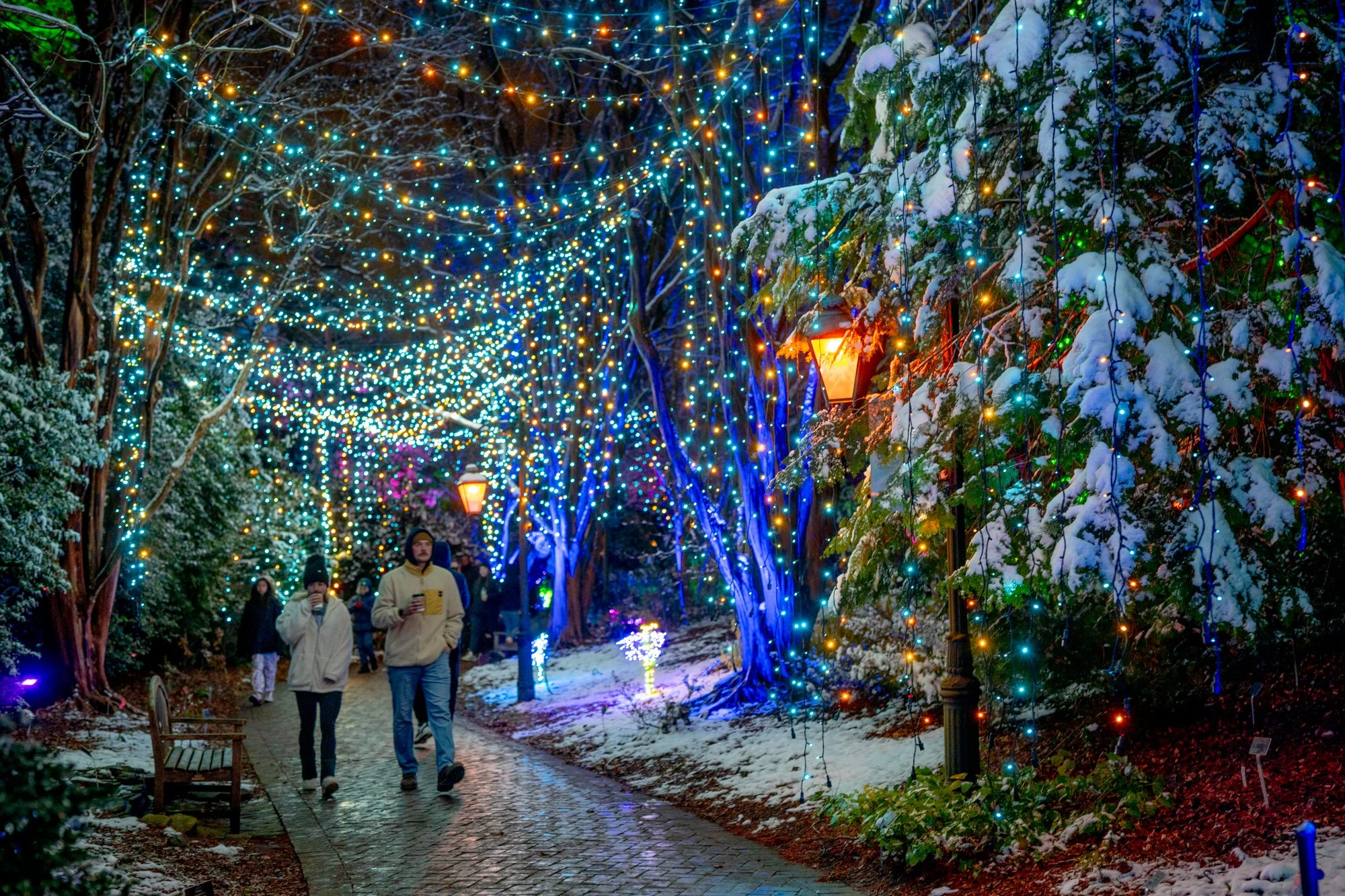
Gardenfest of Lights: The Elements
Role: Environmental art direction, lighting design, concept development, spatial planning, installation coordination
Tools: ArcGIS, Procreate, lighting diagrams, site photography, vendor research, production planning
Type: Public garden lighting experience / real-world installation
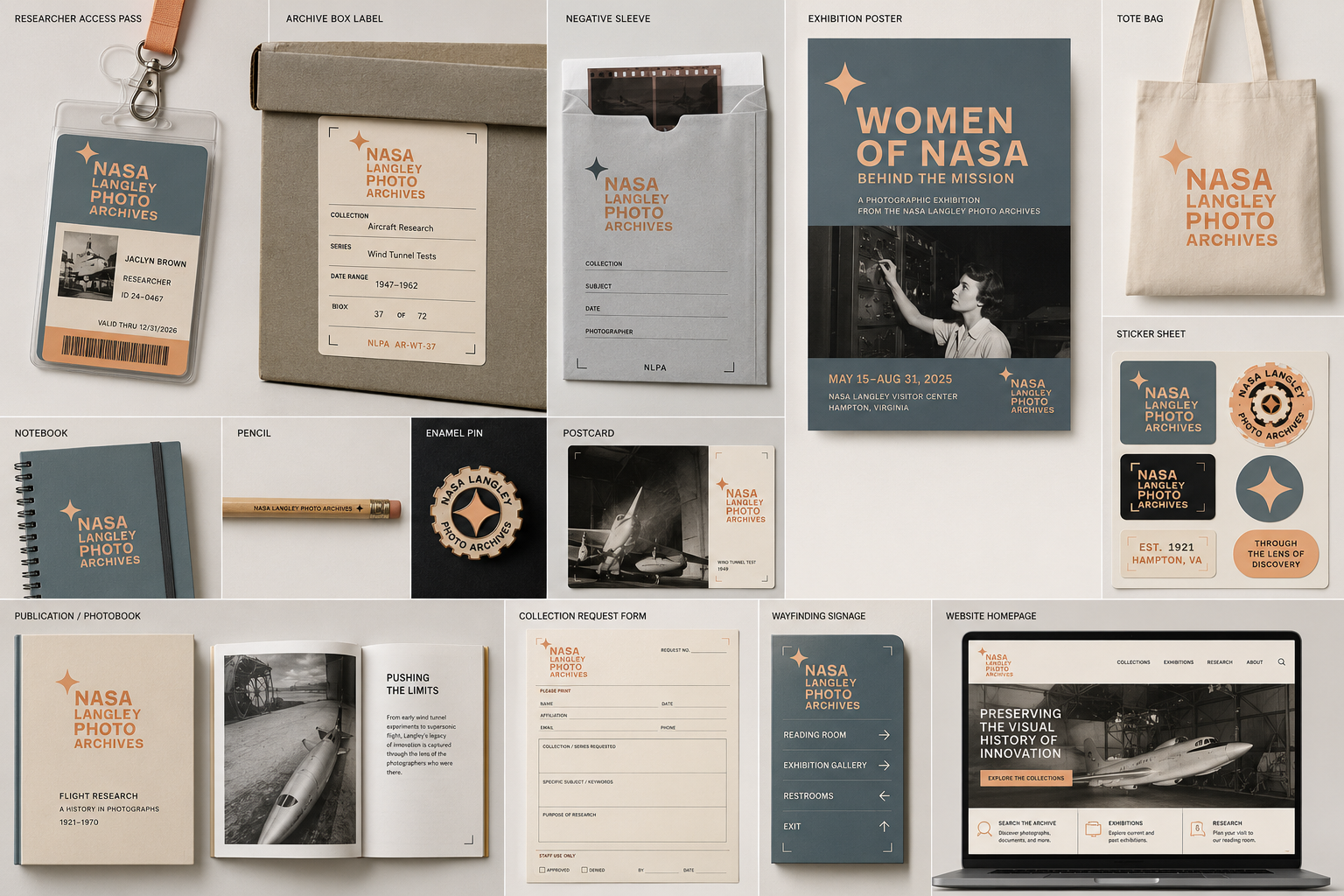
A self-initiated visual system exploring how NASA Langley’s archival imagery, research culture, and regional history could translate into public-facing exhibition materials, printed objects, and institutional communications.
NASA Langley Archive Visual System
Role: Visual research, art direction, archival image editing, color system development, application design
Tools: Photoshop, InDesign, archival research, image sequencing, mockup design
Type: Self-initiated institutional visual system
Generative Chess Visual System
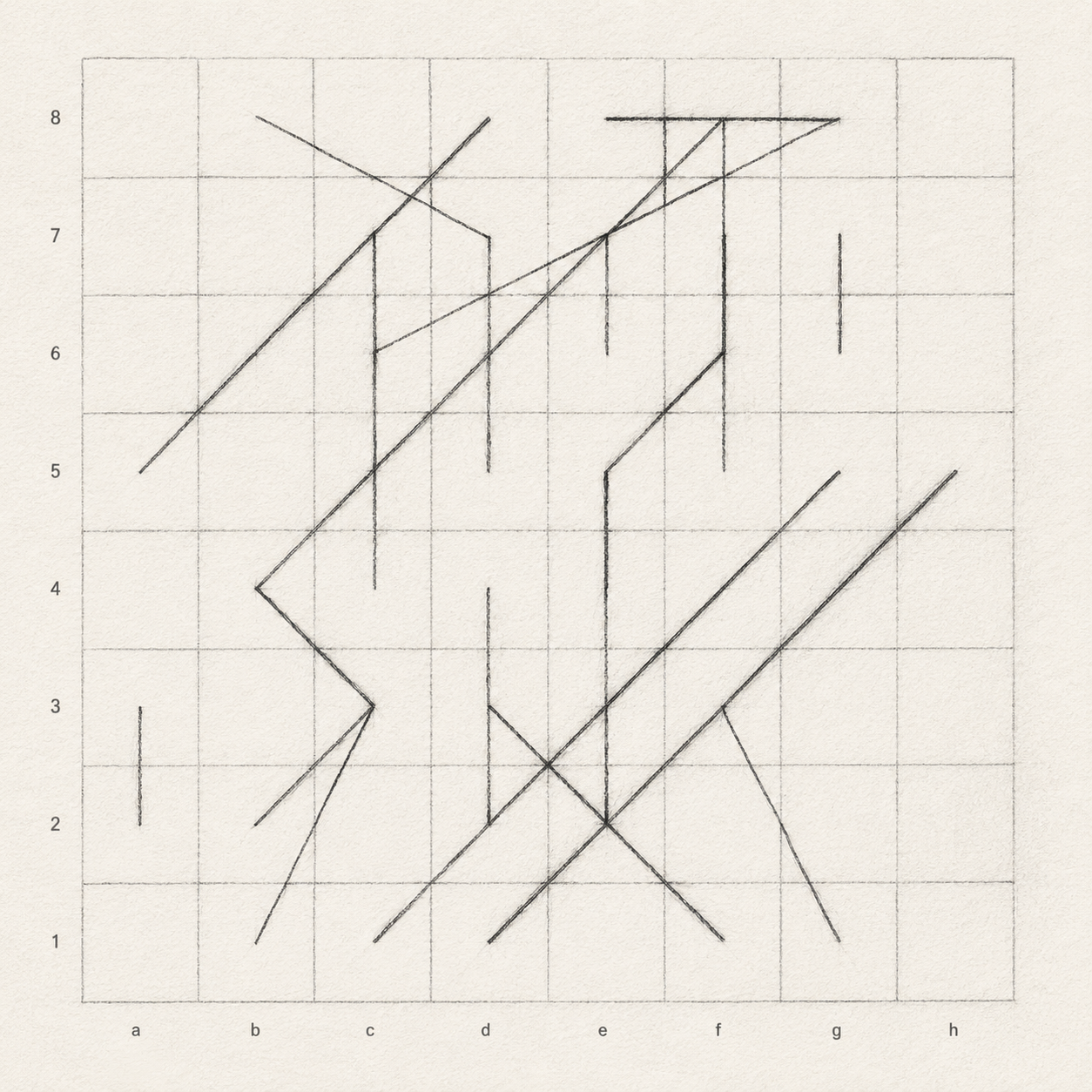
Move Studies
Role: Concept development, visual system design, generative image-making, data translation, photographic print experimentation
Tools: Python, PGN chess data, Photoshop, digital negatives, silver gelatin printing
Type: Personal visual system / speculative art direction case study